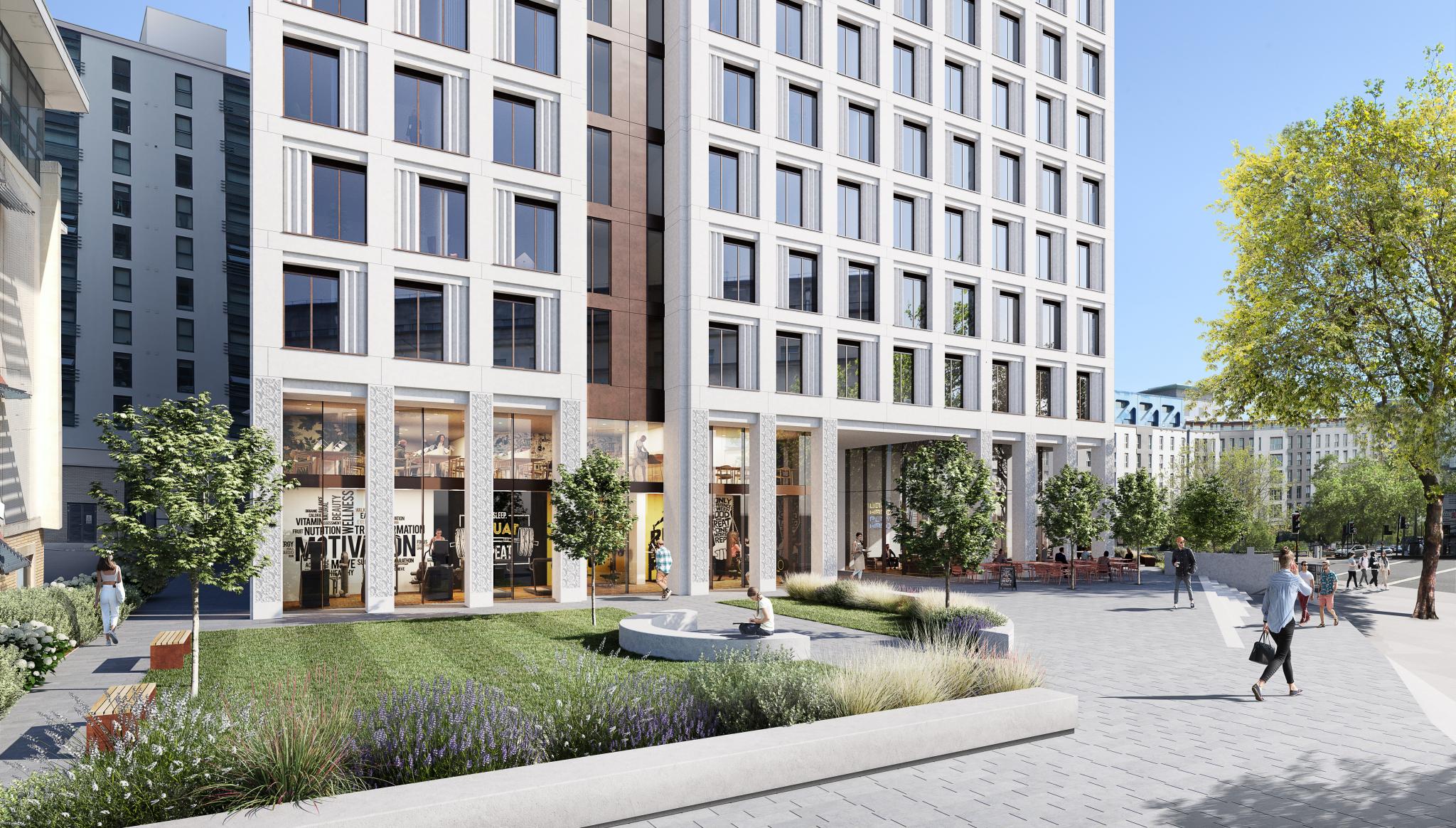
McGregor Coxall has won an award in the prestigious Torsanlorenzo International Prize for Landscape Design and Protection Italy - The firm won Second Prize for the the Atlas Apartments in Section C, residential category. Atlas Apartments are located in Alexandria Sydney.
Located in Power Avenue South Sydney, opposite Alexandria Park, and 600m from the new Green Square Railway Station, Atlas Apartments signify the combined talents and visions of an innovative developer and design focused consultant team. Atlas has 136 apartments in four low-rise buildings located around a central courtyard and a park-side retail space designed for a street cafe. The landscape plan incorporates the principles of urban ecology, a discipline that encompasses use of permaculture and biodiversity to heal city environments. Roof water is recycled for use in the gardens and ponds, and the water features provide natural evaporative cooling to the central courtyard. The garden patterns rise out of the structural skeleton from the car park. Custom seats and water features were designed for the project.
Adrian McGregor and Philip Coxall were featured in the Manly Daily on 3rd August 2008 in a story on the their work on the Spring Cove project in Manly. Written by Sue Hoban, the story outlines the environmental and community challenges of developing a masterplan for 38 new homes on Sydney Harbour. Sue is complimentary of the project design approach and the environmental innovations developed by the design team and client, Lend Lease.
The Town Centre Public Domain Design, led by Adrian McGregor from the Sydney Landscape Architecture firm McGregor Coxall, for Australia's largest Urban Renewal Project has just finished the public exhibition phase. The exhibition was a great success with approximately 500 visitors attending the exhibit over March and April.
The Council of the City of Sydney and Landcom invited the public to inspect progress on the 10 year $1.7 billion project that will eventually house 5,500 residents and 7,000 workers in Zetland, Sydney.
The lead designer and managing director of McGregor Coxall, Adrian McGregor, said "Green Square responds to the need for modern cities to deliver environmental innovation to meet the challenges of urban growth".
Lord Mayor, Clover Moore MP, said that public workshops last October expressed a desire for a "sustainable and green oasis, offering a versatile, sustainable urban landscape". A main component of the design is the green spine of Sheas Stream, which purifies stormwater travelling across the site. Cr Moore stated "once cleaned, water in Sheas Stream and its associated wetlands is used as a water source for irrigation, street washing, and toilet and cooling systems in the community buildings".
The public domain is of comparable size to Martin Place in the CBD, but is divided into various areas including Civic Plaza - a place for public events and activities, a more intimately scaled Neighbourhood Plaza with cafe and interactive water features and Sheas Park with a pond, sun filled lawn and boardwalks. The public domain design will support the new community and compliment the new community facilities, library, residential, commercial and retail uses. Now that the public exhibition is over, public comments and feedback will be incorporated into the plans by Adrian Mcgregor and his team. The community response will play a major role in the future work to be done before the project will be submitted to the City of Sydney for approval in June.
The results for the International Design Competition for the Magok Waterfront in Seoul, Korea, jointly organised by the Seoul Metropolitan Government and SH Corporation, have recently been announced. From over 400 professionals entries from around the world, McGregor Coxall was selected as one of the Merit Award winners in this prestigious competitions.
McGregor Coxall design was underpinned by the philosophical paradigm known in Korea as Eum and Yang, where Eum and Yang are opposites and interdependent yet also consume and support each other. This philosophy drove a design initiative where the site was developed as an activated harbour edge on its western fl ank allowing the larger eastern portion to be preserved and restored as a fl ood plain for research and recreation. This Eum Yang organisation of the site recognised the interdependency yet interconnectedness of the urban and natural systems, and put forward a design showing how these objectives can be compatible in ways that are sustainable and sustaining.
Magok Waterfront proposes to;
- Bring the harbour and commercial hub into the heart of Magok.
- Construct human scaled commercial/residential buildings to the harbour edge as an activator.
- Develop the eastern side of the site as multi-use parklands with an ecological focus and flood control functions.
- Use the parklands as a biotope to clean and polish all stormwater from the new town prior to its discharge into the harbour.
- Establish a Wetlands Botanic Gardens and Nature Reserve that would reinstate and protect this key tract of land,
and establish a sanctuary for plants, animals and birds, and breeding grounds for the migratory Oriental White Stork.
Magok Harbour was recently published in the journal 'Architecture & Culture Korea'.
The Eum Yang city in project in Korea has won an Award for Planning in Landscape Architecture at the New South Wales Institute of Landscape architects awards held at Cockatoo Island. The jury commended the design innovation and environmental attributes of the project.
After half a century of spectacular economic growth accompanied by massive urbanisation and environmental costs, Korea is now reassessing past urban practices in order to develop more appropriate models. This design competition for a new city was launched in an era of critical importance, not only for Korea but for all urban societies searching to harmonise the apparently irreconcilable contradiction between urban growth and the needs of the environment. Our competition entry embraced the philosophical paradigm known in Korea as Eum and Yang. Eum and Yang are opposites. Part of Eum is in Yang, part of Yang is in Eum. Eum and Yang are interdependent. This proposal recognises the interdependency, and interconnectedness of the urban fabric and the natural systems as well as the necessity of developing a relationship where both elements consume and support each other in ways that are sustainable and sustaining.
McGregor Coxall has won an Australian Institute of Landscape Architects NSW Award for Planning in Landscape Architecture. The Green Square Town Centre Public Domain project received a Special Jury Citation for Innovation in Planned Communities.
McGregor Coxall were awarded the lead consultant role for the public domain design of the Green Square Town Centre in South Sydney in 2007. The work follows on from the international competition the firm won for the masterplan of the urban centre in 2001. This sustainable metro village project is located over the Green Square station on former industrial land and is the largest urban renewal in the country. 5500 residents and 7000 workers will use the centre once the ten year, $1.7 billion project is completed. The project proposes public and private uses including three urban squares, a new park, community facilities, library, cinemas, bars, residential, commercial and retail facilities. These are arranged along a restored urban creek and green spine. The project is driven by an ecological engine that delivers recycled storm water & renewable energy to the project.
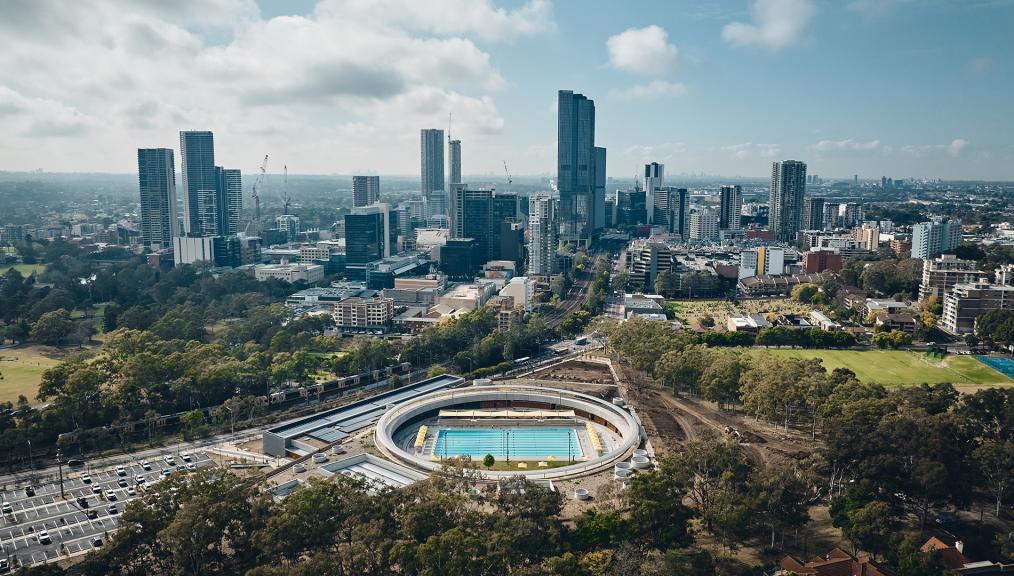
This 2.5ha park is located on a contaminated former industrial lubricant production site on the Birchgrove Peninsula in the inner reaches of Sydney harbour. The site has had a rich history beginning with indigenous peoples, the ’Menevia’ marine villa in the 1860’s, a quarry for ship ballast and finally the Caltex occupation from the 1920’s until 2002. The design uses world leading sustainability principles to minimise the project’s carbon footprint and ecologically rehabilitate the site.
As lead consultant, McGregor Coxall is undertaking project management, design development, construction documentation and administration of the construction contract for the client, the Sydney Harbour Foreshore Authority.
The design reconciles the layers of history with forward looking new technologies to create a regionally significant urban park. The environmental approach is further underpinned by site-wide stormwater biofiltration, recycled materials, and wind turbines for on-site energy production. Construction is nearing completion and the park is scheduled to opening in the coming months.
The premiere international landscape architecture and urbanism journal, Topos from Germany, has awarded its biennial 2009 Landscape Award to McGregor Coxall. The award recognises the design and environmental work of the firm whilst acknowledging potential for further important contributions to the international landscape architecture scene. The award has been conveyed four times to European firms. Topos selected the Sydney based Australian office as a proponent of a new wave of environmentally focused landscape architecture framed within a modernist design approach.
The past winners of the award are Stig Andersson, Denmark; Karres en Brands, The Netherlands; and GROSS MAX, Scotland.
The work of McGregor Coxall will be documented in TOPOS 67, due to be released on 26 June 2009. The award will be presented to directors Adrian McGregor and Philip Coxall as guests of TOPOS in Reykjavik, Iceland on 26th June 2009 in the Alvar Aalto designed Nordic House. A two day landscape architecture conference is set to coincide with the event.
The National Gallery of Australia and its surrounding sculpture gardens were completed in 1983 and are located in the arts and civic campus of Australia's National Capital, Canberra. To house the expanding collection the NGA is embarking on a refurbishment plan including a new building entry, expansion of the indigenous galleries, new function room and creation of new southern gardens.
Since 2005 McGregor Coxall have been working on detailed plans for the public spaces. The gallery expansion and public domain works link to the adjacent Australian High Court and the National Portrait Gallery completing a new ensemble of arts and civic facilities in Australia's Parliamentary Triangle.
The new gardens include a skyspace sculpture by renowned American artist James Turrell. Construction of the project is underway and due for completion in early 2010.
The third Biocity Studio was recently taught by McGregor Coxall at the University of NSW in Sydney. During the intensive cross disciplinary two week summer course students were challenged to rethink conventional urban design, policy and planning in order to tackle a range of environmental and cultural crises affecting Sydney. Premised on the idea that cities are living, metabolising ecosystems whose futures are dependent on embracing wholistic bio-cultural programs, students were required to research, debate and present design and policy solutions for sustainable city growth.
The Biocity Studio required students to research one of twelve predetermined urban systems and it’s supporting infrastructure. Environmental crisis scenarios were then overlaid on these infrastructures to test possible outcomes under peak oil and climate change. Students were then challenged to propose design and policy ideas to avert their crisis and create a more sustainable, post fossil fuel future.
The studio requires students to work in groups and present their findings through digital graphic and verbal presentations. The course was delivered through a series of internal and guest lectures, a field trip, studio discussions and student presentations. Guest lectures for the studio were delivered by peak oil campaigner Matt Mushalik and renewable energy expert Georgie Cole from Kinesis.
The studio produced some exceptional work and explored key issues including the alarming unsustainability of Western Sydney’s continued urban sprawl, the diminishing ability of the Sydney region to produce fresh food, and the blockages in government to implementing a greener economy. The next Biocity studio will be held in 2010 at UNSW.
The Biocity Studio extends thanks to the following invited jury members:
John McInerney - Councillor, City of Sydney
Howard Tanner - National President of Australian Institute Architects
Deborah Dearing - State president Australian Institute Architects
Allen Kearns – CSIRO Deputy Chief Sustainable Cities
David Rolls - Chief Operating Officer, Lend Lease
David Martin - Sydney Olympic Park
Rod Simpson - Principal, Simpson Wilson Architects
In early 2009 the Sydney Morning Herald announced that the New South Wales State Government had begun planning for a new metro under Parramatta Road. This is welcome news to the Sydney Central design team that won the international design competition for Australia’s most maligned road in 2001. As joint team leaders McGregor Coxall helped prepare the strategic plan for the NSW government in 2001 that proposed the idea of a linear urban regeneration along the corridor based on a metro and tram public transport system.
Shortly after the announcement in a follow up article by Kate Farrelly titled ‘Space the new frontier’ comments were sought from Adrian McGregor on the merits of the proposal. He responded that,
"The key to unlocking the true potential of the corridor is to provide the missing link of the M4 east," he says. "Parramatta Road should be a main street, not a highway, so in implementing the metro there needs to be traffic changes that can allow the creation of the neighbourhoods, parks and river crossings - all the things that make a good urban environment."
The SMH article outlines some of the challenges to be faced by government in implementing the project.
A report prepared by the US Urban Land Institute [ULI] and the American Society of Landscape Architects [ASLA] documents the positive economic effect high quality landscape architecture makes on real estate value. In the current economic climate projects that are strategically positioned to take advantage of environmental and landscape assets are performing better.
“Under criteria determined by a joint committee of ULI and ASLA members, 11 projects were selected for study, including: three single-family residential communities, two multifamily (rental) developments, one second-home residential community, one master-planned community, two suburban office projects, and two retail centres. The analysis of value in each case was performed using the distinct definitions, measurements, and criteria important to each of three interested parties: the project’s developer, the user (resident or tenant), and the community.”
Senior landscape architect Joshua Zeunert has been affirmed as Adelaide’s greenest expat in a recent edition of the Adelaide Magazine.
In the magazine, Joshua appears on the cover and in a four page spread titled ‘urban warrior’, proposing design as an answer to a greener, more liveable and sustainable future for cities. Joshua emphasised the potential and need for Landscape Architecture and Urban Design to expand from their traditional role to far reaching, city scale disciplines capable of ecologically transformative visions. “I became a landscape architect to improve the health, ecology and the natural experiential quality of the built environment that we live in” he says.
Joshua’s work with Adrian McGregor on the biocity studio involves “looking at the city as a large, living organism, rather than just a standard machine of inputs and outputs. Essentially, “what we do is ask students to perform a ‘health check’ on the city and examine how it’s going to fare in 2030”. How does a city provide water, food and shelter under climate change and peak oil scenarios?
He provided the following ten suggestions for making Adelaide more sustainable:
Stop urban sprawl. Adelaide needs to concentrate on building greener buildings upwards – not outwards.
Make housing more affordable to encourage the 400+ newcomers who arrive in Adelaide every week to settle centrally, avoiding expensive and polluting commuting.
Avoid and reduce energy consumption; expand on solar, thermal, wind, tidal and geothermal energy to reduce emissions and break reliance on finite and polluting fossil fuels. Stop all subsidies to major polluters.
Create a more efficient water cycle to increase water recycling and reduce and break dependence on the Murray River altogether; explore the merits of a water-trading system.
Reorganise our food supply Farm nearer to the city using organic/permaculture principles; reduce the dependence on fossil fuel inputs for fertiliser, pesticides, harvesting and transport.
Create financial incentives for a more resource-savvy waste system with the goal of no further landfill and 100 per cent waste recovery/recycling.
Tax private car use and congestion; direct these into an improved public transport system that prioritises bus, tram, train, cyclists and pedestrians over private vehicle use.
Recognise nature’s value Protecting and valuing SA’s unique plant and wildlife biodiversity has a direct link to our economy (through tourism, service industries, etc).
Support new industries (eg, renewable energy and carbon banking), which equals new jobs and ongoing growth.
Establish an independent authority focused on addressing long-term issues with bipartisan and/or community agreement.
According to the Sydney Morning Herald Sydneysiders love to live by the beach or on the harbour but a new report suggests that for many, living “next to a park is as good as it gets.” Experts say that property values are increased by proximity to open space – “particularly in the east, inner city and inner west where green space can be hard to find.” Australian Property Monitors senior economist, Liam O'Hara, “believes parkside living is most valuable closer to the city "where there is a relative scarcity of open spaces and natural surroundings". Master planning undertaken by landscape architects is leading to higher prices for ‘green side’ housing.
Adrian McGregor has been included on an inaugural list of Sydney’s most creative people for 2009, a collection of 100 of the city’s top creative pioneers.
Called the Creative Catalysts, the group were selected from a list of over 700 people, suggested by a range of industry advisors– creative leaders and people who have expertise in various design fields - and augmented with a call out through social media.
“It’s about people who have taken the initiative to make a creative Sydney. Some of them are well known and obvious, others have simply inspired others in their field or changed the way Sydney does things or sees itself. By highlighting their stories we celebrate their creativity and hope to inspire others to see their city as a place they too can shape and change”
The Creative Catalysts are part of Creative Sydney, a festival celebrating the wealth and diversity of the city’s creative talents running from May 27- June 12 2009. In its inaugural year, Creative Sydney features a provocative series of talks and events at the Museum of Contemporary Art.
The creative Sydney team organising the event is led by Marcus Westbury and includes Brandon Saul, Stuart Buchanan and Jess Scully, all renowned for their creative contribution to the city.
On Friday 26 June 2009, mcgregor+partners directors, Adrian McGregor and Philip Coxall, accepted the Topos 2009 Landscape Award in Reykjavik. This award is the latest independent recognition of the design and environmental work of the firm and the contributions they have made to the international landscape architecture scene. While on this international stage, Adrian McGregor and Philip Coxall have taken the opportunity to formally announce the name change of the company from mcgregor+partners to McGregor Coxall celebrating 10 years of practice.
Adrian McGregor and Philip Coxall have enjoyed a long and successful partnership for more than twenty years. Having first met while studying together in Canberra in the 1980’s, both initially forged separate international careers, until, in 1998, Adrian McGregor established mcgregor+partners. Shortly after this, Adrian renewed his professional association with Philip Coxall and together they built and nurtured a design office with the support of a talented and committed team.
The official renaming of mcgregor+partners to McGregor Coxall is an acknowledgement of the contribution made by Philip Coxall in the success of the firm and serves as a portent for the next ten years, which promises to be an exciting and rewarding new chapter for McGregor Coxall.
The proposed design for this urban renewal and riverfront park development, in collaboration with Suters Architects, is to be known as Mildura Murray Fields. It is located on the Murray River in Mildura, Victoria. The Murray River sits at the heart of the Murray-Darling Basin, this is Australia’s primary agricultural area, producing 25% of its food.
The design for Mildura Murray Fields recognises that the Murray River is the lifeblood of a vast and complex landscape. The design aims to secure new funding made available as part of the National Urban Water and Desalination Plan by meeting key assessment criteria and through proposed stormwater harvesting and water recycling initiatives. These will have benefit not only for the Mildura Murray Fields site, but also for other communities found well beyond it’s boundaries.
The project design references the agricultural character of the region. It acknowledges the dramatic decline of the Murray River system and the urgent need to implement measures to secure it’s future. Proposed rain gardens form a central part of the overall integrated WSUD strategy for the site. They will serve as Mildura’s storm water catchment filtration network and will contribute to the improved water quality of the Murray River by reducing contaminated stormwater outflows. The cultural centre and park development will also be a generator for local employment opportunities and local business revitalisation and will establish a greater interface between the CBD, the Murray River and the greater region.
In June the Sydney Morning Herald ran a story highlighting recent figures from the United Nations revealed that renewable energy has overtaken fossil fuels in attracting investment for electrical power generation. In 2008, $US140 billion was invested in wind, solar, hydro and other renewable technologies compared with $US110 billion in gas and coal. More than a third of this investment in renewable energy was destined for Europe, however, the biggest growth in investment came from China, India and other developing nations. Wind power attracted the largest investment in renewables, followed by solar and biofuels.
The recent economic slump has seen overall investment to date in 2009 fall 2% in the west, although signs of recovery are evident. Developing countries led by China and India have risen 27%. The UN states that US$750 billion needs to be spent worldwide on renewables between now and 2011.
At the 7 Metre Bar On 1 October 2009, Sydney Lord Mayor Clover Moore MP officially opened the By George! Laneways festival. The 7 metre bar created by landscape architect Adrian McGregor, artist Richard Goodwin and 'architect/gamer' Russel Lowe, is one of eight installations that have transformed under-utilised laneways near George Street in Sydney’s city centre as part of Art&About 2009.
2.6.09 - Today it was reported that ocean acidity and sea level are rising faster than predicted – early signs of a sign of a return to the prehistoric supergreenhouse and yet another marker on the road to irreversible climate change. So do we raise the bar?
At 7metres above sea level this installation combines the landscape of weather, an architecture of catastrophe and the technology of games. Intense weather projections that build in ferocity in response to increasing bar patrons flicker across storm surge detritus.
The 7m Bar hidden in Underwood Street, near Circular Quay, sits at an elevation of 7 metres above sea level. If the ice poles melt we will experience a 75 metre sea level rise according to NASA scientist James Hansen. At 8 meters Underwood Street will be underwater washed by tidal surges and the flotsam and jetsam of our civilisation. The installation has cars, boats, building materials and bodies tangled within building columns like seaweed at the edge of beaches. Apocalyptic cocktails are served by the bar operator, grasshopper.
The project is a step toward the invigoration of Sydney’s neglected laneways – the project was chosen by the jury from over 500 registrations and 68 submissions. The temporary artworks of the festival will remain in place until January 2010. The bar opening times are Tuesday - Friday from 4pm - 11pm. We invite you to confront the future.
Warning on danger of building on farmland
DEBRA JOPSON REGIONAL AFFAIRS REPORTER SYDNEY MORNING HERALD
October 19, 2009
The State Government's Sydney metropolitan strategy allows 400,000 new homes to be built on prime agricultural land, failing to take into account the impact of climate change and the increased likelihood of inland droughts, a leading landscape architect says.
Adrian McGregor is proposing a new way of planning called ''biocity'', says that the $1 billion worth of vegetables the Sydney basin produces annually is critical to NSW as a food and economic source.
The metropolitan strategy threatens the city's food security and would lead to an increase in vegetable prices, he said. ''The most progressive and forward-thinking cities, like London, are doing work on food security because people realise that with the effects of climate change on rainfall and agricultural production on an increasing population, feeding cities … is going to be one of our biggest global challenges,'' he said.
His comments follow a NSW Department of Industry and Investment report that predicted more than half of the city's remaining 1050 vegetable farms would be lost when the north-west and south-west growth areas became suburbs over the next two decades. ''Everyone thinks the west of the state has the most valuable agricultural land. It is the reverse. The city does,'' Mr McGregor said. Research from 2006 showed that the return from agricultural produce $136 per hectare for the entire state, he said.
Ballast Point Park by McGregor Coxall has won the Landscape Design award in the 2009 BPN Sustainability Awards. Premier Nathan Rees, Planning Minister Kristina Keneally and ex-Prime Minister Paul Keating officially opened the 2.8ha park in Birchgrove, Sydney, in July. The park draws on the site's past to create spaces that reveal various layers of its rich history while making a strong commitment towards a more sustainable future. McGregor Coxall’s philosophical approach was that this park should not desecrate other landscape sites in order to obtain resources to build the park.
Sustainability initiatives on the project include: recycled rubble from local tips and use of site soil in retaining wall construction; 8 vertical axis wind turbines for renewable energy; recycled content in all concrete; recycled aggregate for drainage; recycled timber for all decking; recycled soil and mulch for all garden areas; salvaged concrete from the site used as flagging to reinstate degraded pathways; efficient lighting; and over 34,000 endemic species planted from provenance seed stock. A site-wide WSUD stormwater system also captures, detains and treats stormwater before release into Sydney Harbour.
The judges said: "This project has completely revived a significant Sydney harbour landmark. It has not only decontaminated the remnants of the oil tanks, it has turned the landscape into a water cleanser."
On September 1 2009, the environmental research and development subsidiary of McGregor Coxall, Biocity Studio, officially launched its new website, biocitystudio.com. The website is a global urban data wiki designed to capture and display the often hidden vital urban environmental statistics of countries and cities under twelve major urban systems.
Acclaimed environmental journalist Tina Perinotto founder of ‘The Fifth Estate’ has described the website as ‘ambitious and potentially world-transforming’. The site is an informetrics tool to inform city planning under post oil and climate change challenges. Cities house 50% of the world’s population and are responsible for around 80% of global green house emissions yet they only occupy 2% of the world's surface. With the converging challenges of oil depletion and global warming upon us, cities and their citizens need to take leadership and plan for transition. This web site is a way for people to collaborate and share data that can be used to help change urban policy.
The data is open source and can be viewed and graphed by anyone. Up to ten different cities or countries can be selected and compared for a selected statistic. The website is also publishing a list of exemplar projects and University research. Biocity Studio invites registration and contributions from people with access to key city metrics.
There is a growing stack of evidence that beautiful, well-maintained parks provide much more than amenity. Creating and maintaining parks stimulates the economy and also provides quantifiable recreational and environmental benefits along with other services and savings to taxpayers.
In New York City, the recent opening of the High Line Project has spurred significant investment in adjacent properties by reinventing the abandoned elevated rail line as a park. City officials have predicted that this sparked development will bring $4 billion in private investment and $900 million in revenues to the city over the next 30 years. Another recent study on the economic benefits of parks found that Central Park contributed $1 billion to the city's economy in 2007.
McGregor Coxall were awarded 4th Place from 33 entries in the International Design Competition for Vartov Square in Copenhagen, Denmark. The jury stated:
“The entry deserves mention for its inspiring and important contribution to the discussion of how biotopes can be introduced in the city without requiring any compromises in terms of urban life and urbanity.”
Recognizing that green economies are a pathway to a desirable future, Denmark has announced a national ambition to be a pioneer and world leader in the environment. To assert this position, Copenhagen, Denmark’s premier city, will host the United Nations Climate Change Conference [COP 15] on 7-18 December 2009. With the international community and media focused on the city it is an opportune time to demonstrate local initiatives in sustainable urbanism.
Copenhagen Kommune has identified that the regeneration of Vartov Square should be an internationally significant symbol for Danish environmental innovation. Prominently located on the edge of Medieval Copenhagen, close to Central Rail Station and City Hall, the square can be an exemplar of sustainable public space design. This place has to be more than a pleasant gathering area for urban citizens and tourists. It must set a new bench mark upon which other projects can be judged.
Responding to this challenge, our design for Vartov Square is a hybrid synergy where nature and urban life co-exist in a symbiotic relationship. Much more than just a plaza, the design is a multi dimensional arrangement of components that produce a historically relevant meeting place for the community underpinned by a technologically advanced green infrastructure.
McGregor Coxall, as one of “three leading landscape designers”, were selected to participate in the stakeholder workshop for the design of the proposed Rozelle Metro Station. The workshops also included ‘three of Sydneys top architects…and three top artists’ who formed teams to develop visions for the stations. Adrian McGregor participated in the workshops and subsequently developed a design vision for the Rozelle station with Associate Director Christian Borchert. The design proposes a vibrant and sustainable Metro Station environment that is a hybrid building/urban space to become a place to lift the spirit and celebrate the joy of modern public transit. Carved out of Sydney sandstone, the light filled public spaces act as a forecourt into a generous station retail concourse. The designs are exhibited on the Sydney Metro web site for public comment.
Two new public domain rating tools are in draft form in the US. LEED’s ‘Neighbourhood’ rating pilot is available for download. The American Society of Landscape Architects Landscape Rating Tool sustainable sites has also been completed. Both tools plug crucial gaps that currently existing in rating systems that focus only on individual building performance instead of the whole urban system. The LEED tool has 238 pilot projects.
The first rating system for the design, construction and maintenance of sustainable landscapes has been released in the US. The rating system is a partnership of the American Society of Landscape Architects (ASLA), the Lady Bird Johnson Wildflower Center and the US Botanic Garden. The rating system works on a 250-point scale, with levels of achievement for obtaining a percentage of available points, recognised with one through four stars, respectively. Points are awarded through the 51 credits covering areas such as the use of greenfields, brownfields or greyfields; materials; soils and vegetation; construction and maintenance. The rating system is applicable for corporate campuses, transportation corridors, public parks and single-family residences.
London: According to the Sydney Morning Herald the world is much closer to running out of oil than official estimates admit, says a whistleblower at the International Energy Agency who charges it has been underplaying a looming shortage for fear of triggering panic buying. The senior official says the US has played an influential role in encouraging the watchdog to underplay the rate of decline from existing oil fields while overplaying the prospects of new reserves.
The allegations raise serious questions about the accuracy of the organisation's latest World Energy Outlook on oil demand and supply - to be published yesterday - which is used by many governments to help guide their wider energy and climate change policies. This year's report is believed to repeat the prediction in last year's that oil production can be raised from its present 83 million barrels a day to 105 million barrels. External critics have argued that this cannot be substantiated by firm evidence and say the world has already passed its peak in oil production.
Now the ''peak oil'' theory is gaining support at the heart of the global energy establishment. ''The IEA in 2005 was predicting oil supplies could rise as high as 120 million barrels a day by 2030 although it was forced to reduce this gradually to 116 million and then 105 million last year,'' said the agency source, who was unwilling to be identified for fear of industry reprisals. ''The 120 million figure always was nonsense but even today's number is much higher than can be justified and the IEA knows this.
Uptake of the concept of peak oil by the mainstream media in the past has been minimal, even though the phenomenon has been identified and monitored since the 1970’s. In terms of future global oil supply issues, the media is slowly beginning to take notice, although most governments continue to be silent on the issue. Recent articles in the Guardian in the UK and the SMH in Australia have highlighted the pressures upon the International Energy Agency to inflate its World Energy Outlook and critics have long questioned the substantiation of the WEO.
Most independent peak oil experts now believe we have passed the peak, including Sydney expert Matt Mushalik, www.crudeoilpeak.com who continually publishes detailed data on the oil peak. Furthermore, his website presents much evidence that the post-peak scenario is a slippery slope with a more rapid decent to a low energy transition than anticipated by peak oil optimists or naysayers.
Urban trees are an important ecological asset within our inner-city environments and contribute significantly to improving our quality of life and health. In September this year, a new Australian Standard was introduced which 'provides guidance on the principles for protecting trees on land subject to development'. The standard outlines protection measures that should be considered and employed during all phases of development from the early stages of planning through to construction.
Previously, the assessment methodology and definitions contained within arboricultural reports varied greatly between Arborists, Councils, Developers and Consultants and was based on independently developed evaluation methods or international tree protection standards. The new Australian Standard, AS 4970-2009 Protection of trees on development sites, now provides all disciplines with consistent terminology and methodology for determining 'which trees are appropriate for retention' and also provides guidance 'on the means of protecting those trees during construction'.
McGregor Coxall received two prizes at the AILA NSW 2009 Awards. Ballast Point Park received the Award for Design in Landscape Architecture and a Special Jury Citation for New Directions. With the jury citing that, "what makes aspects of Ballast Point Park ground breaking is that McGregor Coxall have made the environmental responsibility and utilising more sustainable design and construction practices 'mainstream' for people using the park."
The Landscape Architecture Australia Unlandscaped awards prize is dedicated to recognising unrealized projects, propositions and scenarios. This years winner was McGregor Coxall's Vartov Square competition proposal in Copenhagen Denmark.
Ballast Point Park was highly commended in the 2010 NSW National Trust Heritage Awards in the Adaptive Reuse category. The award recognises the parks success in drawing on the heritage elements and the site's past to create spaces that reveal various layers of its rich history, while making a strong commitment towards a more sustainable future.
McGregor Coxall have been invited by the Australian High Commission in London, to participate in the London Festival of Architecture in a section of the exhibition titled "Global Practices of Australian Architecture".
Sparked by removal of the M4 motorway toll on the 15th February Sydney radio shock jock Alan Jones asked the city to reconsider the Parramatta Road Plan prepared by McGregor Coxall, Choi Ropiha and Sydney Central in 2001. Alan stated that McGregor Coxall won an International Urban Design competition in 2001, held by the NSW Government. The design involved completion of the M4 east connection, converting Parramatta Rd into a "high street", with shops and residential complexes along the stretch of Parramatta Rd. The plan includes housing for 250,000 people, living in a sustainable way and linking the new dwellings to the transport metro system.
Ballast Point Park was chosen by The Sydney Magazine's stylist Amanda Newman and photographer Corrie Bond as a contemporary urban backdrop for this autumn fashion collection. The images appeared in April's magazine, issue #84.
On the 18th June the annual International Topos Landscape and Urbansim Award, hosted by the city of Krakow Poland, was held. The award ceremony was a joint venture with Topos and the Polish Landscape Architecture Association. Together with the award a 180 participant landscape architecture symposium was held and translated into three languages.
During July the University of Melbourne in partnership with the Energy Research Institute released the first national plan for providing base load power to Australia from clean renewable energy. The plan proposes a ten year roadmap for Australia to reach a 100% renewable energy target making us the first zero carbon nation on the planet. It proposes that all base load energy can be supplied by renewable sources and is affordable to all Australians at $8 per household per week. The plan has caused a stir in the national energy debate and is gaining widespread support. It is a visionary proposal that offers practical solutions utilising green technologies to tackle climate change.
McGregor Coxall is directing a fourth Biocity Studio. Being held at the University of NSW in the second semester, the course will result in students preparing two new metropolitan plan options for Sydney. The students are using the 12 system biocity methodology to imagine Sydney in 2050 in a time of climate change and oil shortage. Guest lecturers from CSIRO, Planning NSW, crudeoilpeak.com and the Energy Research Institute are making presentations to the students to help guide their thinking. The subject will be complete by November and an exhibition of the completed work is planned. The most outstanding work will be published on the biocitystudio.com website in Decmeber.
McGregor Coxall are designing a new park for the Western Sydney Parklands Trust. The Trust oversees the Western Sydney Parklands, the largest parcel of open space in the Sydney Metropolitan region. Formerly part of the 2000 Sydney Olympic events space, the Pimelea section of the Parklands are being re-masterplanned and refurbished by McGregor Coxall to incorporate a new playground, amenity blocks, event space, car parking, shade and BBQ facilities. Underpinning the design is a strong sustainable strategy, which is being driven by both McGregor Coxall and the Trust. All power for the site will be generated by solar panels, toilet flushing utilises stored dam water, all grey water will be reused for irrigation and recycled materials are incorporated. The play area extends this concept by introducing recycled water through a children's play pump and water course system within a unique play experience that aims to educate children on the preciousness of water to the Australian landscape and people.
The fourth annual Sydney Architecture Festival beginning on 20 October 2010 will include a guided tour of the multi award winning 2.5ha post industrial Ballast Point waterfront park. Join Philip Coxall and Sydney Harbour Foreshore Authority representative Tom Kennedy on the site tour. The festival aims to provide thought provoking new perspectives on Sydney by fostering the appreciation and enjoyment of high quality architecture, that promotes sustainable, healthy and culturally rich built environments. The tour will be held on Saturday 30th October, with the choice of 2 departures, 10am and 11.30am. We look forward to seeing you there and hope for some great weather.
The winners for the international design competition for the Tempelhof park design in Berlin have been announced. McGregor Coxall were the only non-European team to make it through to the final shortlist of 8 and just missed out in being awarded a prize. The design competition brief was to develop a new parklands and urban development on the now de-commissioned Tempelhof airfield in Berlin. This airfield was made famous during the airlift, by the allies during the cold war period and features a heritage terminal building designed by Hitler's famous architect Albert Speer. McGregor Coxall's design proposed establishing two functional components for the site, an inner non programmed hof (protected centre), which aimed to retain the wild open nature of the site and an outer programmed ring for park activities that would evolve over time. Separating these two precincts were an oval forest of birch trees, which formed a meditative buffer between the two. The design was commended by the judges for its iconic potential.
McGregor Coxall have been awarded the contract to develop a master plan, financial model and plan of management for the 60ha Callan Park site in Rozelle. The client noted that McGregor Coxall's innovative community engagement strategy was recognised as being the key to deliver this challenging and complex project. The consultation process initiated in June includes a world-leading interactive web based tool, www.callanparkyourplan.com.au. This tool has already allowed community participation in every stage of the master planning process, and over a thousand local community members have registered and engaged online, providing the team with comments and ideas that are being incorporated into the development of a shared vision for Callan Park.
Ballast Point Park and the Mildura Riverfront masterplan hqve been recognised at the national AILA Awards. Ballast Point Park received the AILA National Landscape Architecture Award for Design 2010. The jury applauded the creative approach to reusing materials on site and admired the level of skill and coordination of players involved - from dealing with a lack of geotechnical information to revising design directions when new opportunities revealed themselves on site, eg the discovery of the foundations of a harbourfront villa."
Nemetschek Vectorworks recently acknowledged Adrian McGregor's commitment to a sustainable future with a detailed bio published on their website as a notable user. Adrian has long been a supporter of Vectorworks CAD software and McGregor Coxall use the BIM capabilities to link information to drawings. Adrian was quoted by Vectorworks in the story:
McGregor transforms public spaces across the world into living, breathing works of art. He was about five years old when he discovered his love of the land, as he dug in his grandmother’s garden in his steel-town home of Newcastle, Australia. Later, McGregor merged his passion for landscape architecture with his passion for architectural design, when he studied at the University of Canberra in Australia. “That was the beginning of the journey,” he says.
“Everyone knows we’ve got immense challenges ahead of us—with the end of oil, climate change, a huge loss of biodiversity, and soaring population growth, we’ve got some really, really big issues to deal with. Cities are where most of the human population lives now, so that’s why we’re interested in how we can work with cities to make them more sustainable and also how to transition into the future when we can’t put oil in our cars anymore.”
In 2005 Australia’s premier cultural institution, the National Gallery of Australia in Canberra, embarked on a major refurbishment plan that included a new street entrance, grand function room, expansion of the aboriginal galleries and creation of the Australian Garden. The project also included a major skyspace sculpture titled ‘Within Without’ by the renowned American artist James Turrell.
McGregor Coxall landscape architecture and urban design were engaged to remake the public realm and designing the new Australian Garden which opened on 30th September 2010.
McGregor Coxall ensured the new garden embraced the geometric design principles of the nearby, heritage listed Gallery and Sculpture Garden designed by Col Madigan and Harry Howard that opened in 1983. The new garden contains significant design elements such as pathways, bridges, blade walls, Australian native planting’s and water elements.
The building extension and landscape were conceived at the outset to be tightly integrated so as to present a unified, legible, accessible public face to the NGA. Located on the previous car park, the main garden is designed around retained Eucalyptus trees. Two planar lawns form the main space creating an ‘inside-outside’ room of huge proportions. The lawns are designed to host functions and events such as temporary art exhibitions and garden parties.
After six months of intensive community consultation, the Draft Callan Park Master Plan is complete. The Master Plan process has been led by McGregor Coxall for Leichhardt Council. The consultation program was organised through a web 2.0 tool developed specifically for the project, www.callanparkyourplan.com.au. The web site has had over 1500 registered users and received more than 85,000 page views.
Adrian McGregor of McGregor Coxall said, “In only six months we have succeeded in gaining 87 per cent community support for the new Master Plan that many thought was impossible to deliver. This is because we listened carefully to all the community desires in developing the plan for Callan Park as a modern and world leading ‘Wellness Sanctuary’ that can provide both mental and physical health benefits to the community. Everyone wins with this plan”
Key elements of the draft Master Plan include a wellness centre, stepup and stepdown accommodation for those with mental illness, accommodation and support for carers, and services that can bridge the gap between acute care and home life through critical recovery services such as vocational training, jobs, arts and cultural opportunities and participation in community farming and gardening.
These services are proposed within an open heritage landscape that fulfils the objects of the Callan Park (Special Provisions) Act 2002, the legislation that protects and preserves Callan Park for community, health and education uses and protects and promotes public access to open space and the foreshore.
The consultation process for the draft Master Plan has been broad and innovative. In addition to multiple workshops and briefings, the callanparkyourplan website has attracted thousands of visits and visitors who have participated in online feedback and structured surveys. The community identified the need to structure the draft Master Plan around the Callan Park (Special Provisions) Act 2002, and inspired the Project Principles which have underpinned the design so far.
In the most recent stage, the community was invited to contribute its thoughts on more than 60 options embedded in the 12 draft Master Plan layers. Innovative elements of the draft Master Plan include a community farm and orchard, a skatepark for young people on the footprint of a derelict building, a studio and dwelling for an artist in residence as part of the Cultural Cluster, substantial bush regeneration at Callan Point, reinstating an endangered saltmarsh ecology at the foreshore, restoration of important heritage buildings and a commemorative ‘Veteran’s Field at the end of Wharf Road.
Online survey feedback confirms that members of the community recognise that the Master Plan team has developed a draft that ‘ appears to be inclusive of much of the feedback received through the consultation process and is very consistent with the Wellness Sanctuary principle as well as creating and preserving space for Community located around mental health services.’
The draft Master Plan has a strong foundation of Sustainability. The community supports on site recycling of waste water, on-site trigeneration of power, a site wide intranet, an energy smart grid, and aims to achieve energy targets and low carbon outputs. After incorporating final feedback, McGregor Coxall will present the final Master Plan, Plan of Management and Financial Model to Leichhardt Council on 7th December 2010.
The Annual International Waterfront Centre Award was announced in Baltimore USA on the 5th of November at the Urban Waterfronts International Conference on Waterfront Planning, Development and Culture. Bench mark waterfront projects from around the world including England, China, Canada and the USA were recognized for excellence.
McGregor Coxall was awarded the highest honour for Ballast Point Park project in Birchgrove on Sydney Harbour. Director Philip Coxall of McGregor Coxall and the project client, Di Talty of the Sydney Harbour Foreshore Authority were presented the award in Baltimore.
The Waterfront Centre [www.waterfrontcenter.org], a Washington D.C. based non-profit educational organization established in 1981, functions as an international forum aimed at assisting communities and professions make the wisest and best long term uses of waterfront resources to achieve maximum public benefit.
Ballast Point Park is also featured in the latest Spanish based a + t 2010 Strategy series book which explores and analyses interventions in public space from around the world.
Projects to make cities use water more sustainably were recognised at the Stormwater Industry Association of NSW 2010 Awards for Water-sensitive urban design. Urban design and landscape architecture firm McGregor Coxall topped the strategic and master planning category with their Mildura Riverfront masterplan prepared with Equatica and Suters. The excellence award was announced last month at a function at the ANZ Stadium in Sydney. The project reconnects the centre of Mildura in Victoria with the Murray River. The masterplan covers 24ha, of which 16ha were set aside for public parklands. The plan proposes wetlands to collect, filter and treat the entire towns stormwater. The Riverfront will also include residential, commercial and transport developments.
The 2010 Awards for Planning Excellence provided an opportunity to recognise the depth of talent and level of skill of the industry in Victoria. The awards identified work that leads practice, and changes the world so slightly for the better. The 2010 President’s Award was awarded to the Mildura Rural City Council for the Mildura Murray: Riverfront Central Precincts Feasibility project.
The Mildura Murray project prepared for the Mildura Rural City Council by McGregor Coxall and Suters Architects was partly funded by Tourism Victoria. Working with limited resources, Council has allowed the team to create an ambitious plan to generate investment, create community amenity and enhance the local and tourist appeal of their riverfront area.
The feasibility builds on previous plans and studies to deliver local and visitor outcomes. It maintains the existing qualities of the area, including both natural elements and built structures, to create a vibrant and diverse waterfront that is rich in social, economic and environmental experiences.
The project illustrates how local governments can be the catalyst for development whilst also meeting their community’s vision.
The NRMA recently launched a media campaign using McGregor Coxall imagery to revive our 2002 plan to turn one of Sydney's most congested and blighted roads into a significant urban regeneration area catalysed by public transport. The project featured on the front page of the Sydney Morning Herald in February with the NRMA commissioning SKM engineers to develop a tax increment financing model to support the urban framework plan. The project is still as current as it was in 2002 after our Sydney Central team won the international competition and completed the master plan Parramatta Road.
After more than 6 years of design and international coordination across three countries, the new Taichung City Government building in Taipei has opened. The project was an international design competition won by Webber Hoffer Architects from Switzerland for a building to house the main city government functions. McGregor Coxall designed and documented all the site works for the civic precinct consisting of four large garden courts, pedestrian plazas and rooftop gardens. The main entry plaza is activated by water jets spouting from the paved surface shaded by formal rows of large canopy trees. The matrix of Taiwan cherry trees, lawns, reflection ponds, granite paving and precast concrete seating provides a shady retreat for staff and visitors to escape the surrounding, hot urban environment.
The first stage of the Pimelea Parklands redevelopment undertaken by McGregor Coxall for the Western Sydney Parklands Trust was opened by Premier Keneally late last year. The stage one redevelopment features a significant new playground designed in cooperation with Fiona Robbe. It offers a range of play options including water pumps, flying foxes, slides and swings wrapped together by a sinuous pathway system within a bushland setting. The design also extends the Parkland’s facilities by providing a number of new barbeques and shade structures as well as two amenity buildings, designed by Choi Ropiha. One of the focuses of the redevelopment has been to employ environmental initiatives across the site. These include solar panels on the buildings to provide power for access road lighting and all barbeques. A site wide water strategy has been developed in coordination with Equatica and includes the use of onsite dam water for toilet flushing and grey and storm water for irrigation. Materials used on site include recycled timber, green concrete, recycled aggregates, soils, mulches and ropes. In addition to this the wood from two dead trees found on site have been reused and sculptured to form play elements. The park has been enthusiastically received by the locals, and McGregor Coxall are currently progressing with stage two of the works.
At the 7 Meter Bar On 1 October 2009, Sydney Lord Mayor Clover Moore MP officially opened the By George! Laneways festival. It was one of eight installations that transformed under-utilised laneways in Sydney’s city centre as part of Art&About 2009. This installation combined the landscape of weather, an architecture of catastrophe and the technology of games. Intense weather projections that built in ferocity in response to increasing bar patrons flickered across storm surge detritus. The 7 meter Bar hidden in Underwood Street, near Circular Quay, sat at an elevation of 7 metres above sea level.
This unique installation and bar, created by landscape architect, Adrian McGregor, artist, Richard Goodwin and architect/gamer Russell Lowe was a winner of the 2010 AILA NSW Awards for Design.
At over sixty hectares Callan Park is one of the largest and most significant public facilities in Sydney’s Inner west. Engaged by Leichardt Council to develop a master plan strategy for the park, McGregor Coxall proposed a pioneering web 2.0 enabled consultation model called ‘Your Plan’. An Australian first, the interactive web site was designed to capture support for the master plan by facilitating a process that allowed the community to take ownership of the project. The web site received more than 80,000 page views from 1,500 registered users and helped the masterplan achieve an 87% public approval rating. Callan Park was awarded a communications and research award. www.callanparkyourplan.com.au
Landscape Architecture Australia magazine published two articles in its recent May edition exploring the newly completed and controversial design for the Australian Garden at the National Gallery of Australia by McGregor Coxall. Both articles contribute to the discourse regarding the design of national cultural facilities in Australia. The photo above depicts a living artwork of Australian flowers on Geoff Ostling adjacent to the James Turrell 'Skyspace', Within Without.
Adorned in his own whole body floral tattoo, Ostling is a sculptural and ephemeral form. The native floral motifs displayed on his body reflect upon Australian species planted within the garden. Further, this McGregor Coxall temporary artwork explores the various ways in which Australian people connect with Australian plants. In doing so, the artwork creates a dialogue between the garden, the museum and contemporary Australian culture.
The articles of both Christopher Vernon of the University of Western Australia and Ken Maher, chairman of Hassell and a professor in the FBE at the University of New South Wales point out that McGregor Coxall have retained fundamental aspects of the original design for the 3ha space created in 1981 by Howard as well as architects Col Madigan and Christopher Kringas of Edwards Madigan Torzillo & Briggs. This is seen in both the use of the golden mean measure overlaid with a triangular grid to proportion areas, as well as the exclusive use of Australian and endemic Canberra plant species.
Maher elaborates by noting that aspects of the existing design also made it necessary for McGregor Coxall to depart from the original design in areas. He points to the character of the new entrance and gallery facilities designed by Andrew Anderson of PTW, which take a clear direction away from the character of the original architecture and argues that therefore not taking a direction away from Howard's design in the Australian Garden would in fact have "compromised and diminished the value of the Howard landscape" in the adjacent sculpture garden.
Going back to the original design which called upon an "unashamedly Australian" space, Maher questions whether the character of the garden reflects this. Maher concludes by pointing out that changes in our current political climate may be necessary to achieve even higher levels of design execution for designers operating in this culturally important context in the future.
Vernon writes that the gardens have become a growing collection and a landscape that unifies the museum "...it is timely to now consider the NGA's surrounds as a cohesive whole, to unite this landscape of fragmentation'.
Adrian McGregor presented the recent works of McGregor Coxall at the highly successful agIdeas International Design Week in Melbourne this month. Established twenty years ago by Ken Cato, the event brings together forty internationally acclaimed creative people in fields including landscape architecture, architecture, advertising, food, graphics, theatre and more. Other speakers included Fanette Mellier from France, Sanky from the UK as well as Simon Pole from Woods Bagot Australia. With over 2500 delegates, the event was well attended and included design conferences, business seminars, workshops, panel discussions and social engagements located across the city of Melbourne.
The Pimelea Park upgrades are currently reaching the second stage of completion. The design of the park includes a world-class childrens playground and follows ecologically sustainable development (ESD) principles, utilising recycled materials and ensuring minimal water consumption, energy use and infrastructure. The park is located on the corner of Cowpasture Rd and Horsley Drive in the suburb of Abbotsbury. Kristina Keneally opened the first stage of McGregor Coxall's new design for the site in November 2010.
McGregor Coxall consulted with Fiona Robbe, one of Australia's leading playground designers, as well as timber artist Andrew Smith to achieve a highly engaging children's playground reusing timber from dead trees that were found within the existing park. Rope was also salvaged from the recently sunk HMAS Adelaide ship for reuse in the playground, as was sawn timber from the original Botany Bay port infrastructure prior to its expansion. Flying foxes, climbing walls, water play areas, swings and slides were also designed into the space.
In Stage One works, McGregor Coxall installed barbeque and picnic areas as well as designing two amenities buildings. Stage Two works which are nearing completion include two innovative new carparks that capture, clean and reuse stormwater. A large scale multipurpose events space facilitates concerts and large gatherings is linked to a precast concrete entry bridge. An amenities building associated with the events space was designed by award winning architecture firm Choi Ropiha Fighera and provides an administrative space to cater for outdoor weddings and other large gatherings.
Further usage of ESD principles is seen in the use of solar power to drive the lights as well as the pumping of greywater through the toilets in the amenities building from a water storage facility within the park. To achieve this McGregor Coxall collaborated with Water Sensitive Urban Design firm Equatica. The interactive water features within the park also draw from rainwater stored onsite and are activated by visitors manually operating lever pumps. In this manner, McGregor Coxall hopes to instill in children a philosophy of valuing and conserving water resources in Australia. This incorporation of manual labour as well as the use of simple and functional materials such as galvanised steel and reused timber decking reflects upon the former pastoral use of the site and intentionally echoes the atmosphere of a farm.
A family oriented space, the park is due to be completed in July 2011.
In April 2011 McGregor Coxall celebrated the opening of its Melbourne studio on the corner of Burke and Swanston Streets with Mark Haycox leading as Associate Director. The studio has already secured both government and developer led projects.
Haycox brings with him a wealth of knowledge following more than twenty years experience in the built environment as an urban designer, landscape architect and design manager. Before joining McGregor Coxall, he spent more than 10 years with VicUrban and prior to that worked with Denton Corker Marshall. In these roles, he has collaborated with many prominent design practices here and abroad and worked with many of Australia’s leading private sector developers, all levels of Government and numerous areas of the community. His experience ranges from award winning public realm, civic and community based projects through to commercial buildings, high and medium density residential and retail developments and ESD programs.
Complementing the McGregor Coxall team with his client based experience, Haycox is already assisting our clients through project and design enabling roles. His appointment provides our Victorian based clients with a new local contact and offers our other clients and projects across Australia and abroad with a wealth of experience to draw on. With a collaborative approach to design, he brings a style that is equally applied to leading multidisciplinary teams to resolve complex problems through to working through the finer resolution of design details.
At the March Urban Design Connect workshop Adrian McGregor spoke about key issues for urban design in Australia. Urban Design Connect meets at ARUP monthly with the aim of raising the profile of design in NSW.
In his talk, Adrian McGregor suggested that Australian standards and controls need to be implemented to deal with issues of climate change including flooding, drought and sea level rise, considering peak oil strategies, urban resiliance, a beyond zero energy plan, a low carbon/coal future and the impact of a carbon tax.
Specific to Sydney, opportunities exist to ensure food security through the control of urban sprawl and land release in conjunction with developing transportation infrastructure in the area. According to McGregor, urban regeneration is also a key issue, and this is currently possible along the Parramatta Road Corridor which has the capacity to increase its population up to 250,000 people.
In March Philip Coxall spoke to architecture students at Sydney University along with Bob Earl, director of landscape architecture firm Oculus. Second year students are currently completing a design studio led by Craig Burton that focuses on the areas of BP Park North Sydney and Ballast Point Park, both award winning designs of McGregor Coxall.
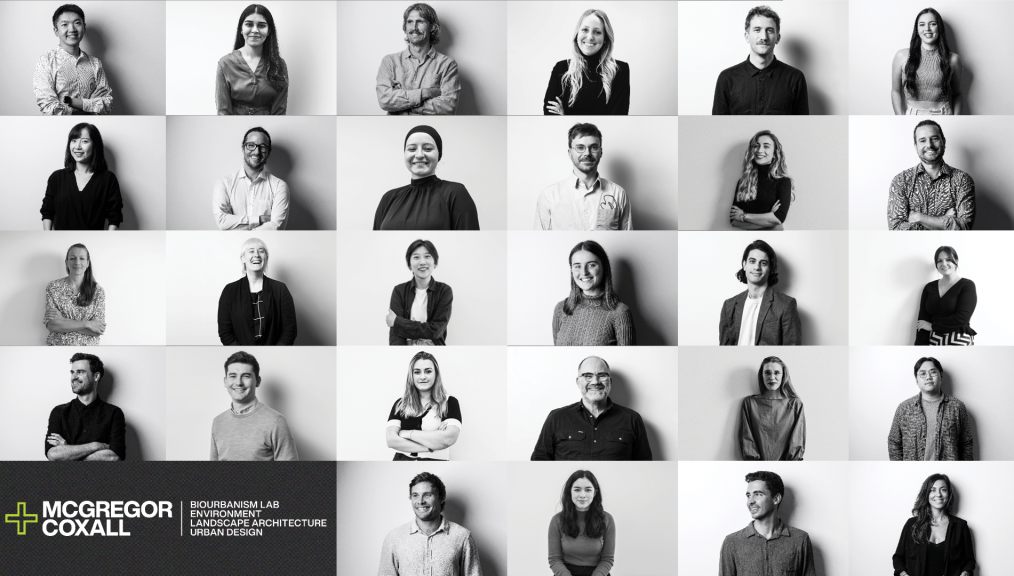
Coxall explained to the students the role of landscape architecture and the level of design thinking a landscape architect brings to projects. He also expressed his belief that the interdisciplinary and eclectic nature of the McGregor Coxall office, with landscape architects, architects and urban designers from Australia, Germany and Spain, promotes a great diversity of ideas and expression which ultimately fosters innovative and high quality design solutions.
Coxall continued by describing the ways in which the Biostudio run by McGregor Coxall at various universities around Australia is indicative of the philosophy of the design studio in forming strategic responses to global environmental challenges. Through also presenting several recent works of McGregor Coxall, he demonstrated the ability for systems thinking to be applied to both large and small scale projects. This environmental approach is ultimately reflected in finely crafted detailing that remains responsive to the broader philosophy of the project.
McGregor Coxall were invited to speak to the American Society of Landscape Architects and the Horticultural Society of New York. Melbourne Studio Director Mark Haycox, Sydney Associate Georg Petzold and student Landscape Architect Stephanie Bailey presented 'An Antipodean Conversation', which explored McGregor Coxall’s response to the question of ‘What makes an Australian landscape architecture studio?’
Robust discussions were held with participants on the firm’s design work as well as outcomes from the recent BioCity Studio run by McGregor Coxall at The University of New South Wales. The conversations also reflected on larger directions, similarities and differences in the practice and education of published Landscape Architecture in the United States and Australia.
The NY invitation follows McGregor Coxall winning several highly coveted international awards for their design of Ballast Point Park, Sydney. This includes recently winning the International Award for Architecture from the Chicago Athenaeum: Museum of Architecture and Design and The European Centre for Architecture Art and Design, the Azure Award for Best in Landscape Architecture in Canada this June, as well as receiving the Annual International Waterfront Centre Award in Baltimore, US in 2010.
In 2011 Lacoste+Stevenson supported by McGregor Coxall were
selected as the winning proposal for the University of Technology
Sydney (UTS) Podium Building Design Competition. The proposal was selected as
part of a two-stage design excellence competition process, run by the
university and judged by representatives from UTS, the city of Sydney
and the NSW Department of Planning.
Five architects, all Australian,
were selected to participate in Stage 2 of the competition. The new building wraps around the existing iconic tower to create a
more welcoming main entry to the university as well as activating the
campus interface with Broadway. In a deliberate move to juxtapose the
Brutalist architecture of the UTS Tower, the new building focuses on the
qualities of softness, lightness and femininity with a glass armature
that mimics the movement of a curtain and a white frit in the pattern of
a forest creating an impression of lace and delicacy.
UTS is anticipating increased levels of public engagement with the university as the new building affords enhanced levels of visual connectivity with Broadway, the main street adjacent to the campus and a central spine of Sydney’s CBD. This will allow exhibitions and public spaces on the ground floor to be seen from the street, and is part of the design team’s strategy to increase the public profile of UTS as one of Australia’s top 15 universities.
McGregor Coxall’s design of Ballast Point Park, Sydney has won the prize for Best Landscape Architecture at the first international AZ awards held in Toronto in June 2011. The AZ Awards were created by Azure Magazine, a bi-monthly publication that profiles the work of international designers. The international jury included architect Craig Dykers of Snøhetta (Oslo/New York), product designer Eero Koivisto of Claesson Koivisto Rune (Stockholm) and interior designer Glenn Pushelberg of Yabu Pushelberg (Toronto/New York).
The AZ Awards showcased design from over 25 countries and received over 600 submissions in multiple areas, including Architecture, Furniture and Lighting. Other winning entries included an all-glass kitchen that disassembles for recycling by Valcucine, an ingenious portable prayer mat and an Oceanside artist residence on Newfoundland’s Fogo Island by Todd Saunders of Norway.
A milestone in the history of Callan Park has been reached, with the Master Plan formally presented to the Minister for Planning Brad Hazzard MP on 11th November 2011 before an enthusiastic gallery of about 40 residents.
After more than twelve years of community activism and two previously failed master plans, McGregor Coxall’s masterplan for a modern health facility to assist those with mental illness was approved by Leichhardt Council earlier in the year. Leichardt Council and local community members met on 19th July 2011 to decide on final aspects of the masterplan, which prioritises mental health care and support, protects open space and heritage and provides open space for the larger community.
The range of land uses outlined in the masterplan responds to strong feedback from the local community, respecting the original use of Callan Park as a mental health asylum and increased amenity for a range of local community uses. The project was informed through rigorous face-to-face community consultation as well as the dedicated www.callanparkyourplan.com.au interactive website, for which the firm won the 2010 AILA NSW Award for Research and Communication in Landscape Architecture.
Leichhardt Council is now working with the State Government to ensure the Master Plan gains state approval and is implemented via the recommended establishment of a Governing Trust.
McGregor Coxall is currently developing an integrated transport strategy that will deliver Bayside City Council’s sustainable transport goals and guide transport planning within the municipality over the next fifteen years. In partnership with UrbanTrans and JH Planning, the project will integrate transport modes, emphasising opportunities for sustainable transport options and promoting better integration between transport and land uses.
The City of Bayside is located on the eastern edge of inner Melbourne and is made up of a number of “villages”. Like so much of greater Melbourne, the settlement pattern of these conglomerations was heavily influenced by the motor vehicle, meaning that neighborhoods were created away from traditional growth corridors along rail and tram lines. Now with a population over 98,000 and projected growth of almost 20% by 2026, the municipality is seeking to integrate a sustainable transport system into this future growth. This will result in a reduction in the rates of per-capita vehicle kilometres travelled (VKT) for the area and minimize car-oriented land use patterns. In conjunction with managing land use, demographic and settlement patterns, the integrated transport strategy is envisaged as key to facilitating economic activity and promoting the quality of life of residents.
McGregor Coxall will be analysing how connections, linkages and transport needs for each village can be resolved whilst also addressing how the villages connect to each other as well as the surrounding areas and transport systems. Transportation is crucial to the creation of great communities, and McGregor Coxall are working on a tailored outcome that meets Bayside’s specific demographic, economic and geographic conditions.
The commencement of construction of a new residential community at Little Bay Cove Sydney has been marked by a soil turning event onsite. Key consultant McGregor Coxall joined developers Charter Hall and TA Global together with other project consultants to celebrate the occasion. The site is historic; UNSW produced the first Australian solar panel onsite and the new owners are continuing this tradition by encouraging the design team to deliver benchmark sustainable design solutions from project conception through to completion.
Set across a sprawling 13.6 hectare parcel of rare oceanfront land, Little Bay Cove is Sydney's exciting new eastern suburbs beachside community.
Connected to the established Prince Henry community and encircled by turquoise blue ocean and manicured golf courses, the project is a coastal escape in the city.
Magnificent views open out from all points of the compass. Designed to take advantage of its rugged coastline location, expansive tree-lined streets create sweeping vistas to the ocean and beyond. There's a sense of openness with over 50% of the estate dedicated to its central lake, landscaped parks, wide streets and meandering walkways.
Key sustainable initiatives include a large area of parkland to form the heart of the water sensitive urban design (WSUD) and integrated water management strategy, through reusing stormwater onsite and establishing a blackwater treatment plant, making the development one of the most progressive for WSUD in Australia.
Roadside bioretention swales and rain gardens will remove pollutants before the water is reused for the residents gardens, toilets, washing machines and car washing.
McGregor Coxall designed the masterplan for the site with a strong community approach, delivering a neighbourhood hub for the larger region with several public parks. Rare Miocene formations and ochre deposits have been preserved which are used by local aboriginal community groups. As well as delivering parklands and streetscapes, the firm is currently designing several superlots of medium density individual townhouses and higher density apartments.
Sydney’s second largest CBD is set to undergo a major rejuvenation, with McGregor Coxall’s Parramatta River urban design Strategy publically exhibited in late 2011.
McGregor Coxall was commissioned by Parramatta Council to prepare an urban regeneration plan for a 31ha site located on Parramatta River Foreshore. The refined strategy re-orientates the city back to the river and establishes four new vibrant mixed use River Quarters that bring activity back to the banks of Parramatta River. Part of the strategy proposes to demolish the council’s riverside car park and excavate the land where it sits to carve out “Parramatta Quay”, creating a ferry arrival point connecting the CBD to Circular Quay.
Lord Mayor John Chedid fully supports the urban design strategy and says “we want to stop turning our back on the river. It’s one of the best assets we’ve got. We want to leverage it, we want activities, we want large events, we want developments.”
The $100 million in public infrastructure work would be partly funded from development contributions along the corridor. The plan is structured to be implemented in stages by Council working in partnership with developers, state and federal governments.
McGregor Coxall has won four awards at the Cement Concrete & Aggregates Australia (CCAA) Australian Public Domain Awards.
Cement Concrete & Aggregates Australia (CCAA) Public Domain Awards provide significant and national recognition for designers, contractors, developers and asset owners who set new benchmarks in the use of concrete to enhance our public domain. Judged by an eminent panel of independent landscape and design Architects, the awards have grown in prestige and notable peer recognition over the years attracting entries of a world-class standard.
Ballast Point Park won awards in the following categories:
Best Overall Project in Australia and the NSW State Winner Award
The Judges comments stated that the clear care taken to express so many complex aspects of the past of this site, making that past relevant to the future is what distinguishes this project. Materials, structures and spaces are recycled and integrated with new work with real skill, so that a place previously the territory of industrial activity alone, achieves a new life and supports new uses. This project demonstrates the many ways that concrete can be used successfully in the public domain, balancing variety and richness with coherence.
Sustainable Design Award
The Jury was delighted by the efforts made in this project to use concrete in so many ways here, and the care taken not only to maintain and recycle old fabric, but to integrate it with new and to give it new life and meaning. The success of the outcome should encourage designers everywhere to reconsider how they value existing concrete fabric, devising ways to keep and give it new life and continuing meaning as part of new projects in the public domain.
Precinct Award
The jury declared that a historic harbour-side site with eclectic characteristics has been given a coherence that unites a rich and complex variety of parts – old and new, industrial and recreational, flat and vertiginous, enclosed and open, massive and intricate. Avoiding the pitfalls such complexity presents, the designers have shown masterful control and clearly knew when to stop. While they have used concrete in many ways, they demonstrate a consistency of rigour that impressed the Jury — a project of multidimensional quality.
Ballast Point Park, Sydney has won an annual “International Architecture Award” which was announced in Warsaw, Poland in July 2011 under the auspices of the Association of Polish Architects. The International Architectural Awards are the highest and most prestigious distinguished building awards program to honour new architecture, landscape architecture, interiors and urban planning. The winning entries will form part of the international exhibition starting at the 13th International Architecture Biennale in Buenos Aires and then travel inside Europe.
The Chicago Athenaeum is an International Museum of Architecture and Design, appropriately based in the world's first city of modern architecture and design—Chicago. The Museum is supported by its public, memberships, and by grants and sponsorships from corporations, foundations, and local and national government agencies. Members of the International Advisory Committee of The Chicago Athenaeum are Sir Norman Foster, Richard Rogers and Richard Meier.
Sydney Magazine ranks Ballast Point as one of Sydney’s most outstanding public places. The panel noted that the “park boldly models its exceptional natural and man-made topography. A Sydney acropolis of the spirit: respectful, delightful and assuredly contemporary in all aspects of its design. It is very popular and a must-see for everyone who loves our city”.
The Panel who judged the list is formed of Architect Philip Thalis founding principle Hill Thalis Architecture + Urban Projects; Adam Russell, academic at UTS; Vince Frost, creative director and CEO of Frost* Design; Tarsha Finney architect, urbanist and senior lecturer at UTS; Christopher Brown, the CEO of Tourism & Transport between 1992 and 2011.
McGregor Coxall had a successful December evening at the 2011 Australia Institute Landscape Architecture [AILA} New South Wales Awards, taking out four awards in the following categories; Planning Excellence - Callan Park Master Plan; Urban Design - Parramatta River Urban Design Strategy; Design – Australian Garden and New Entry National Gallery of Australia; Planning – Itaoui Woodland Park.
Planning Excellence – Callan Park Master Plan
The jury stated, “Building on the back of an award winning, community engagement strategy, McGregor Coxall have developed a Master Plan for a Wellness Sanctuary, a modern health facility to assist those with mental health illness in NSW.
The project demonstrates innovative approaches to current socio-cultural, environmental and economic aspects of landscape including economic, social, political and demographic trends, biodiversity loss, impacts of climate change and health and well-being.
McGregor Coxall and its team have prepared a coherent document that makes sense of a hugely complex site and myriad issues. Its success lies in its distillation of a large body of information into a clearly enunciated vision for the future of this important public site.”
Urban Design – Parramatta River Urban Design Strategy
The jury stated, “The urban design strategy re-orientates the city back to the river and proposes four new vibrant mixed use River Quarters. Parramatta Quay was conceived as a new arrival point connecting the CBD to Circular Quay by ferry and creating a public and private domain of international quality.
The clear communication of the design issues and their resolution demonstrates a rethinking of Parramatta’s strategic focus. The strategy will be further refined into a master plan and business case for government to partner with the private sector for delivery.”
Design – Australian Garden and New Entry National Gallery of Australia
The jury stated, “McGregor Coxall have produced an exceptional Australian Garden located within the new entry to the National Gallery of Australia.
The attention to detail in facets of the garden further reinforces the significance of the Australian Garden within one of Australia’s most significant modern cultural precincts.
All of the elements that shape the garden have been carefully thought out which results in a timeless and elegant design. The public domain is enhanced by the spaces within the garden and can only increase over time as the native vegetation establishes.”
Planning – Itaoui Woodland Park
The jury stated, “The design strategy draws on a new environment movement in cemeteries called ‘natural burials’ leading to a master plan that can accommodate the clients demands whilst protecting and reinstating the site’s unique Cumberland Plain Woodland landscape. The resulting Master Plan places great importance on protecting the site’s existing woodland ecology and visual character and incorporates a number of sustainability initiatives.”